

What Temperature Should Your Fridge Be? Irish Food Safety Temperatures Explained
Published on: May 15, 2026
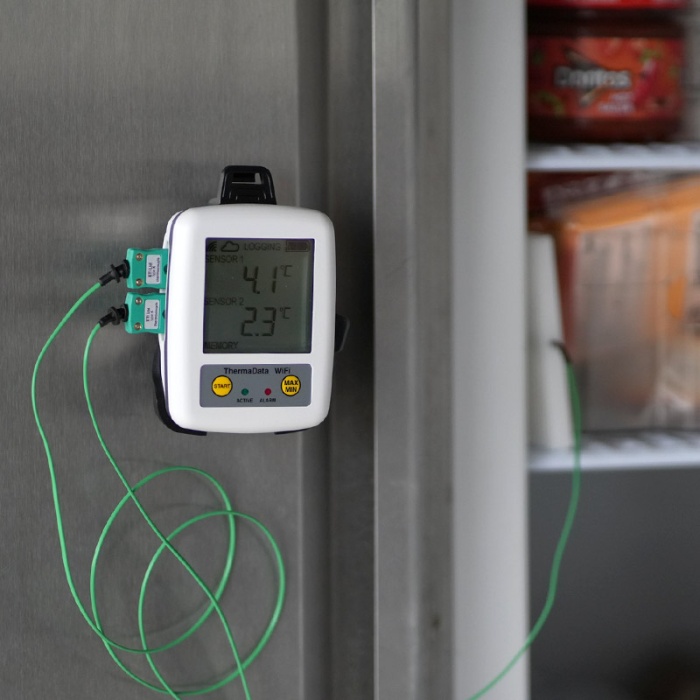
Ask five chefs what temperature a fridge should run at and you'll get five answers somewhere between "cold" and "colder than that". The law is more specific, and so are Environmental Health Officers. Here are the numbers every Irish kitchen needs to know, why they matter, and a few things we've learned from setting up and monitoring real kitchens around the country.
The temperatures that matter
| What | Target | The rule of thumb |
|---|---|---|
| Fridges | 5°C or below (legal max 8°C) | Aim for 5°C. The 8°C figure is the ceiling, not the target |
| Freezers | Minus 18°C or below | Frozen solid, no soft spots |
| Hot holding | 63°C or above | Below 63°C, the clock starts ticking |
| Cold holding / display | 5°C or below (8°C max) | Same as fridges. Display counters count |
| Cooking | 75°C core | Probe the thickest part |
| Reheating | 70°C for 2 minutes | Once only. Never reheat twice |
| The danger zone | 8°C to 63°C | Where bacteria multiply fastest. Minimise time here |
The zone between 8°C and 63°C is where bacteria multiply rapidly, which is why almost every rule above exists: keep cold food out of the bottom of it, hot food above the top of it, and move food through it as quickly as possible.
Why "5°C or below" and not 8°C?
Irish regulations set 8°C as the legal maximum for chilled food, but nobody sensible runs a fridge at 8°C. Fridges cycle. The compressor kicks in and out, the door opens during service, deliveries get loaded warm. A fridge set at 8°C will spend part of every hour above it. Set the target at 5°C and the normal ups and downs of a working kitchen stay safely inside the limit.
We see this constantly during SmartChef setups. When we configure a kitchen's fridges as part of our free setup, it's common to find at least one unit whose dial says one thing and whose actual air temperature says another. Often a fridge that's been quietly running 2 or 3 degrees warmer than anyone thought. A €10 fridge thermometer (or a calibrated probe) tells you the truth; the dial tells you what the fridge intends.
What the dial doesn't tell you: lessons from 24/7 monitoring
Since we launched our WiFi temperature sensors, which log fridge and freezer temperatures to the cloud every five minutes, we've been able to see what actually happens inside fridges when nobody's looking. A few patterns worth sharing:
Defrost spikes are normal. Sustained rises are not.
The first thing new monitoring customers notice is that their fridge temperature graph isn't a flat line. Fridges run automatic defrost cycles, and the temperature briefly rises during each one before dropping back. That's normal and safe. What matters is a sustained breach, which is exactly why SmartChef only alerts on sustained rises rather than panicking you every time the defrost cycle runs.
Nights and weekends are when fridges fail
We've seen walk in fridges begin drifting upwards late in the evening after service. Often a door that hadn't fully closed. With monitoring in place, the sensor flags the sustained rise and the alert goes out by phone before the night is lost; the stock gets moved, and what would have been a skip full of wasted food and a difficult Monday becomes a two minute fix.
Delivery time is the danger window
Watching the data across kitchens, the most common temperature wobble isn't equipment failure. It's the fridge door standing open while a delivery is checked and loaded. It recovers quickly, but it's a good argument for checking deliveries fast. It's part of why we built photo label scanning. The quicker the delivery check, the quicker the door closes.
What EHOs actually check
Environmental Health Officers don't just glance at your fridges. They check that you know your temperatures and can prove it:
- Records, twice daily. Fridge and freezer temperatures logged morning and evening, every day you trade. Gaps are the thing that draws attention.
- An accurate probe. Your records are only as good as your thermometer. EHOs verify probe calibration records; a weekly ice water check (0°C, give or take a degree) plus professional calibration every 6 to 12 months keeps you covered.
- What you did about problems. A fridge reading 9°C isn't automatically a failure. No record of what you did about it is. Corrective actions matter as much as readings.
If your records live in a copybook, all of this is possible. It's just fragile. Pages get skipped on busy days, and there's no record at all of what happened overnight. Digital records with reminders close the gaps; sensors close the nights and weekends.
Want all of these temperatures on one page?
Our free 2 page HACCP cheat sheet covers the critical temperatures and daily checks. Made for printing and sticking to the kitchen wall.
Getting your fridges right this week
Three things you can do today, no software required:
- Put a thermometer in every fridge and compare it to the dial. Trust the thermometer.
- Set targets, not maximums. 5°C for fridges, minus 18°C for freezers, and treat anything drifting towards the legal limits as a maintenance flag, not business as usual.
- Do the ice water probe check. Glass of ice, top up with water, stir, wait a minute, probe the centre. Between minus 1°C and plus 1°C and you're good.
And if you'd rather the checking, recording and reminding happened by itself, that's the job SmartChef was built for. Fridge checks with reminders, probe temperatures filled in over Bluetooth, and optional 24/7 sensors watching the nights and weekends. Plans from €25/month with a 30 day money back guarantee, and we'll set your kitchen up for free.
FAQ: Fridge Temperatures for Irish Kitchens
What is the legal fridge temperature in Ireland?
Chilled food must be kept at 8°C or below. However, 5°C or below is the standard kitchens should aim for, so that normal door opening and defrost cycles never push food past the legal limit.
How often should fridge temperatures be recorded?
Twice daily, typically at the start and end of the day, every day you trade, with the reading, the time, and who took it.
Is it normal for fridge temperature to go up and down?
Yes. Defrost cycles, door openings and deliveries all cause short rises that recover quickly. What matters is sustained temperature above the safe limit. That's a sign of a fault, an overloaded unit, or a door problem.
What should I do if my fridge is above 8°C?
Check the obvious causes first (door, overloading, recent delivery), move high risk food to another unit if the temperature doesn't recover, record the reading and the action you took, and get the unit checked. The record of your corrective action is what an EHO wants to see.
Do EHOs accept digital temperature records?
Yes. Complete, accurate and available is what counts, whether the record is on paper or on a phone. Digital records with automatic reminders make the "complete" part much easier.