

24/7 Temperature Monitoring for Irish Kitchens — Why WiFi Sensors Are Replacing the Clipboard
Published on: April 1, 2026
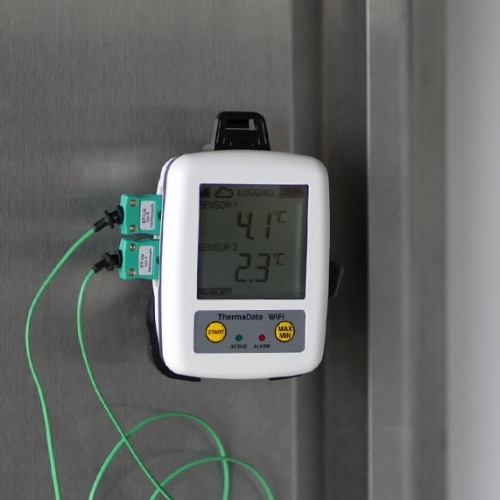
Picture this: it's Monday morning. You arrive at the kitchen to find the walk-in freezer has been sitting at 2°C since Saturday night. The compressor failed sometime over the weekend. Nobody knew. Two grand worth of stock — gone.
It's the kind of thing that happens more often than people like to admit. And the frustrating part? It was completely preventable.
That's exactly why more and more Irish kitchens are switching from manual temperature checks to automated WiFi monitoring. Not because clipboards don't work — but because they only work when someone's there to use them.
1. The gaps that manual checks can't cover
If you're running a busy kitchen, your team is probably taking fridge and freezer temps a few times a day. Opening shift, maybe lunchtime, closing. That's the routine.
But here's the problem:
- Overnight — Nobody's checking the freezer at 3am when the compressor gives up.
- Weekends and bank holidays — If the kitchen's closed, who's watching?
- Busy service — When the tickets are flying, temps are the first thing that gets skipped.
- Staff changes — New staff don't always know what to check, or forget entirely.
Manual checks give you snapshots. But what happens between those snapshots is a mystery — and that's where problems hide.
2. How automated monitoring fills the gaps
With WiFi temperature sensors, your fridges and freezers are being watched continuously — every few minutes, around the clock, whether you're there or not.
Here's how it works:
- Small wireless sensors are placed in your fridges, freezers, or cold rooms.
- They connect to your kitchen's WiFi and send readings to the cloud automatically.
- Every reading is logged — giving you a complete, timestamped history.
- If temperatures drift outside the safe range, you get alerted before it becomes a disaster.
No clipboards. No handwriting. No "I'll do it in a minute" that turns into never.
3. We'll do everything we can to reach you
Here's the thing about alerts: they're only useful if someone actually sees them.
That's why SmartChef doesn't just send one notification and hope for the best. When there's a sustained temperature breach — not a brief spike from someone grabbing the milk — we make every effort to get through to you:
- SMS alerts — Straight to your phone. Up to three numbers can receive texts.
- Email alerts — Sent to as many addresses as you need.
- App notifications — If you're logged into SmartChef, you'll see it there too.
- Voice calls — If texts and emails don't get a response, your phone will ring. If you don't answer, we'll leave a voicemail and try again.
And if the problem continues? Follow-up alerts keep coming at regular intervals until it's resolved.
The goal is simple: if something goes wrong, someone on your team will know about it. Whether it's 2pm or 2am.
4. Smarter alerts — not more alerts
One of the biggest worries people have about automated monitoring is alert fatigue. "Will I get pinged every time someone opens the fridge for a box of cream?"
The short answer: no.
SmartChef is designed to filter out the noise. A quick temperature spike during busy service — totally normal in a working kitchen — won't trigger an alert. The system waits to see if temperatures stay outside the safe zone for an extended period before notifying anyone.
That means you only hear about real problems, not false alarms.
5. Why EHOs love digital temperature records
Environmental Health Officers have seen it all. Scribbled logs with suspiciously perfect readings. Temps that were "definitely taken" but somehow never written down. Records that only exist from Monday to Thursday because nobody's there at the weekend.
Digital monitoring changes the game:
- Every reading is timestamped — no more "was that 8am or 8pm?"
- Records can't be backdated — the data is what it is.
- Complete history on demand — pull up any date range in seconds.
- Evidence of action — if there was a breach, the log shows when it was resolved.
Many EHOs actively encourage automated monitoring because it removes the guesswork. You're not just saying you checked the temps — you can prove it.
6. The hardware: professional-grade, and you own it
The sensors we use are made by ETI, a UK manufacturer with decades of experience in commercial temperature monitoring. They're built for real kitchen environments — not consumer gadgets dressed up for food service.
What you get:
- WiFi-connected data logger
- Temperature probe
- Protective silicone cover
- Magnetic mount for easy installation
- Battery powered — you'll get an alert when the battery is low
And importantly: you own the hardware outright. It's not a rental. There's no lease agreement, no returns at the end. You buy it, it's yours.
The ongoing monthly fee covers the monitoring service, cloud storage, alerts, and support — not the equipment itself.
7. Who gets the most value from temperature monitoring?
Automated monitoring makes sense for any kitchen that can't afford to lose stock or miss a compliance issue. But it's especially valuable for:
- Hotels and care homes — Multiple fridges and freezers, often spread across different areas.
- Multi-site operators — See all your locations from one dashboard, without driving site to site.
- Businesses with high-value stock — A freezer full of premium meat or seafood is a significant investment.
- Kitchens closed overnight or weekends — When no one's there, the sensors are still watching.
- Anyone tired of chasing paper — If HACCP temps are always the thing that slips, automation solves that.
8. What about the cost?
Let's be honest: automated monitoring isn't free. But here's how to think about it.
The hardware is a one-time purchase. The monthly monitoring fee is modest — roughly the price of a couple of takeaway coffees per week.
Now compare that to:
- The cost of losing a freezer full of stock (easily €1,000-€3,000 or more)
- The time your team spends on manual checks and paperwork
- The stress of an EHO inspection when your records are patchy
- The reputational damage if something goes wrong
For most kitchens, it pays for itself the first time it catches a problem you'd otherwise have missed.
Ready to stop worrying about your fridges?
If you're still relying on clipboards and hoping for the best, there's a better way.
SmartChef's temperature monitoring gives you:
- 👉 Continuous monitoring — every few minutes, 24/7
- 👉 Multi-channel alerts — SMS, email, app, and voice calls
- 👉 Complete HACCP-compliant records
- 👉 Professional hardware you own outright
- 👉 Peace of mind — even when you're not there
Get the full details at SmartChef Temperature Monitoring, or get in touch for a quote tailored to your kitchen.
FAQ: WiFi Temperature Monitoring for Irish Kitchens
1. How do WiFi temperature sensors work in a commercial kitchen?
A small wireless logger sits on or inside your fridge or freezer. It takes a reading every few minutes and sends it to the cloud over your kitchen's WiFi. You can see all your temperatures in SmartChef, and if something goes wrong, alerts come through automatically.
2. Will I get false alarms every time someone opens the fridge door?
No. The system waits to see if the temperature stays outside the safe range for an extended period before alerting you. Brief spikes from door openings during busy service won't trigger notifications.
3. What happens if nobody responds to the first alert?
SmartChef keeps trying to reach you. If the problem continues, follow-up alerts are sent at regular intervals. Voice call alerts are also available — if texts and emails don't get through, your phone will ring. If you don't answer, we'll leave a voicemail and try again.
4. Can multiple people receive temperature alerts?
Yes. You can set up to three mobile numbers for SMS alerts and as many email addresses as you need. That way, if one person is unavailable, someone else on the team will get the message.
5. Do I own the sensors or is it a rental?
You buy the hardware outright — it's yours to keep. There's no lease, no returns, and no surprise fees. The ongoing monthly cost covers the monitoring service, cloud storage, and alerts.
6. What if my WiFi is unreliable?
The sensors store readings locally if they lose connection. Once WiFi is back, everything syncs automatically. You'll also get a notification that the sensor went offline, so you can investigate.
7. How often do the sensors need new batteries?
The loggers run on standard AA batteries. When the battery gets low, you'll receive an alert with plenty of time to replace it.
8. Do Environmental Health Officers accept digital temperature records?
Absolutely. EHOs generally prefer digital logs because they're timestamped, can't be backdated, and show a complete history. Many inspectors comment positively on automated monitoring systems.
9. Is WiFi temperature monitoring expensive?
The hardware is a one-time purchase, and the monthly monitoring fee is comparable to a couple of takeaway coffees.
10. Can I pause alerts during a planned defrost?
Yes. You can temporarily pause alerts for a specific unit from inside SmartChef. Readings continue to be logged, and all pause actions are recorded for your compliance records.
11. Who is temperature monitoring best suited for?
Any food business that can't afford to lose stock or miss a temperature breach — restaurants, hotels, care homes, schools, pubs, delis, and catering companies. It's especially valuable for businesses with valuable frozen stock or multiple locations.