

HACCP for Food Trucks in Ireland — A Complete Guide to Food Safety Compliance
Published on: February 15, 2026
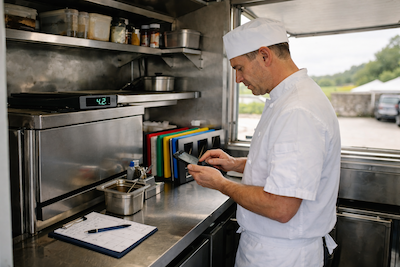
If you're running a food truck in Ireland, you're subject to exactly the same food safety laws as a restaurant, hotel or café. The law makes no distinction between a fixed premises and a mobile catering unit. A food truck serving burgers at a festival has the same HACCP obligations as a Michelin-starred kitchen.
This catches some food truck operators off guard. The assumption that mobile food businesses operate under lighter rules is a common misconception — and one that can lead to problems during an Environmental Health Officer inspection.
The good news is that HACCP compliance for food trucks is entirely achievable. With the right systems in place, it becomes part of the daily routine rather than a burden. This guide explains what's required, what risks to watch for, and how a digital food safety app can make compliance far more practical for mobile catering businesses.
What is HACCP and why does it apply to food trucks?
HACCP stands for Hazard Analysis and Critical Control Points. It's a systematic approach to food safety that identifies potential hazards in food preparation and puts controls in place to prevent them.
Under EU Regulation 852/2004, all food businesses in Ireland must implement a food safety management system based on HACCP principles. This includes food trucks, market stalls, mobile catering vans, and any business that prepares or serves food to the public.
In practical terms, HACCP for a food truck means:
- Understanding the hazards specific to your menu and setup
- Monitoring critical points like cooking temperatures and fridge storage
- Keeping records that prove your food safety system is working
- Training staff so they understand their responsibilities
- Being able to demonstrate all of this to an Environmental Health Officer
The Food Safety Authority of Ireland (FSAI) provides guidance specifically for food trucks and food stalls, including Guidance Note 16 which covers mobile food operations in detail. Many food truck operators use the Safe Catering Pack as the basis for their HACCP system.
Common food safety risks for food trucks
Food trucks face some unique challenges that fixed premises don't. Understanding these risks is the first step to managing them properly.
Limited space
A food truck kitchen is compact. This makes cross-contamination a real concern. Raw and cooked foods, allergens, and cleaning chemicals all occupy the same small area. Colour-coded chopping boards, careful workflow planning, and strict separation of raw and ready-to-eat foods are essential.
Temperature control challenges
Food trucks often operate outdoors in variable conditions. On a warm day at a festival, your fridge is working harder than it would in an air-conditioned kitchen. Regular temperature checks become critical. If your fridge can't maintain 5°C or below, you have a food safety problem.
Water supply and waste
Unlike fixed premises with mains water, food trucks rely on tanks. Running out of clean water mid-service means you can't wash hands properly — a fundamental food safety requirement. Waste water also needs proper management. EHOs will check your water arrangements during inspections.
Allergen cross-contamination
In a small prep area, preventing allergen cross-contact requires discipline. If you're making gluten-free options alongside regular items, or handling nuts in a confined space, you need robust allergen management procedures. Clear allergen information must also be available to customers.
Staff turnover and training
Many food trucks operate with seasonal or casual staff. High turnover makes consistent food safety training a challenge. Every person handling food needs to understand the basics, and you need records showing that training has taken place.
What Environmental Health Officers expect from food trucks
When an EHO inspects your food truck, they're checking whether your food safety system works in practice — not just on paper. They'll typically look at:
- HACCP documentation: Evidence of a written food safety management system appropriate to your operation
- Temperature records: Daily fridge and freezer checks, cooking temperatures for high-risk foods
- Cleaning schedules: Documented cleaning routines that are actually being followed
- Delivery records: Evidence that you're checking incoming goods and recording supplier details
- Allergen information: Clear documentation of allergens in every menu item
- Staff training records: Proof that food handlers have received appropriate training
- Physical cleanliness: The actual condition of your truck, equipment, and storage areas
- Handwashing facilities: Adequate provision for hand hygiene during service
EHOs can inspect at events, markets, or wherever you're trading. They may arrive unannounced. Being inspection-ready at all times is the goal.
HACCP records food trucks must keep
Record-keeping is where many food truck operators struggle. The records you need to maintain include:
- Fridge and freezer temperatures: Checked and recorded at least daily
- Cooking temperatures: Especially for high-risk items like burgers, chicken, and reheated foods
- Cooling records: If you cool cooked food for later use
- Cleaning schedules: What was cleaned, when, and by whom
- Delivery checks: Supplier name, date, condition of goods, temperatures where relevant
- Staff training: Dates, topics covered, who attended
- Corrective actions: What you did when something went wrong
These records need to be organised and accessible. During an inspection, you shouldn't be searching through folders or trying to remember where you put last month's temperature logs.
Why paper-based HACCP often fails for food trucks
Traditional paper-based HACCP systems were designed for fixed kitchens with office space, filing cabinets, and stable environments. Food trucks have none of these.
Common problems with paper HACCP on food trucks include:
- No space for paperwork: There's barely room for food prep, let alone clipboards and folders
- Damage from grease and moisture: Paper records get stained, wet, and illegible
- Lost or incomplete records: Sheets go missing, entries get forgotten during busy service
- Difficult to review: Finding specific records when an EHO asks for them takes time
- No backup: If your folder is lost or damaged, your compliance history goes with it
These aren't minor inconveniences — they're compliance risks. An EHO seeing incomplete or disorganised records will have concerns about whether your food safety system is genuinely working.
How a digital HACCP app simplifies compliance for food trucks
A digital food safety app addresses most of the practical problems food trucks face with HACCP compliance.
With a HACCP app on a phone or tablet:
- No paper storage needed: All records are digital and stored securely in the cloud
- Quick data entry: Temperature checks take seconds, not minutes
- Automatic timestamps: Records show exactly when checks were completed
- Always accessible: Pull up any record instantly during an inspection
- Reminders and alerts: The app prompts staff when checks are due
- Photo evidence: Attach photos to delivery records and cleaning logs
- Staff can use their own phones: No need for dedicated hardware
For food trucks specifically, digital HACCP makes sense because mobile operations need mobile solutions. Trying to maintain a paper-based system in a cramped, busy food truck is fighting against the environment.
How SmartChef supports food truck operators
SmartChef is a digital HACCP and food safety app designed for Irish food businesses, including food trucks and mobile catering operations.
For food truck operators, SmartChef provides:
- Daily HACCP records: Temperature checks, cleaning schedules, and opening/closing checklists completed on any device
- Delivery logging: Fast delivery checks with photo capture and automatic data extraction
- Food safety training: Online training modules included so you can train staff and keep records in one place
- Audit-ready records: All data is organised and accessible when an EHO arrives
- Works on phones and tablets: No need for laptops or desktop computers
SmartChef's records cover the areas Environmental Health Officers expect to see during an inspection.
Useful resources for food truck operators
If you're starting a food truck or looking to improve your compliance, these resources provide valuable guidance:
- FSAI: Food Truck and Food Stall Guidance — Official guidance from the Food Safety Authority of Ireland, including Guidance Note 16 and resources for mobile food operators.
- Local Enterprise Office: The Business of Food Trucks — A practical guide from the Local Enterprise Office covering the business side of running a food truck in Ireland.
- Caterboss: Guide to Starting a Food Truck Business in Ireland — A comprehensive guide covering permits, equipment, locations, and marketing for Irish food truck operators.
Frequently asked questions
Do food trucks need HACCP in Ireland?
Yes. All food businesses in Ireland, including food trucks and mobile catering units, are legally required to have a food safety management system based on HACCP principles under EU Regulation 852/2004. You must have a documented HACCP plan covering your menu and operations. There are no exemptions for mobile food businesses.
What HACCP records must a food truck keep?
Food trucks must keep records of fridge and freezer temperature checks, cooking and reheating temperatures, cleaning schedules, delivery checks with supplier details, staff food safety training, allergen information for all menu items, and any corrective actions taken when something goes wrong.
How often do Environmental Health Officers inspect food trucks in Ireland?
Inspection frequency varies based on risk and compliance history. New food trucks typically receive an initial inspection shortly after registration. After that, inspections may occur annually or more frequently if issues are found. EHOs can also conduct unannounced inspections at events and markets.
What temperature should a food truck fridge be?
Food truck fridges should operate at 5°C or below. This should be checked and recorded at least once daily, ideally at the start of service. Freezers should be at -18°C or below.
Do I need food safety training to run a food truck in Ireland?
Yes. At least one person involved in food handling must have completed recognised food safety training. The FSAI recommends that all food handlers receive appropriate training for their role. Many Environmental Health Officers expect to see evidence of training during inspections.
Can I use a digital app for HACCP records on a food truck?
Yes. Environmental Health Officers in Ireland accept digital HACCP records, and many prefer them because they are timestamped, harder to falsify, and easier to review. A HACCP app or food safety app is particularly practical for food trucks where space for paperwork is limited.
What are the main food safety risks for food trucks?
The main food safety risks for food trucks include temperature control challenges due to limited refrigeration and external temperatures, cross-contamination in confined spaces, allergen management with small prep areas, limited water supply affecting handwashing and cleaning, and staff turnover leading to inconsistent training.
How do I register a food truck with Environmental Health in Ireland?
Food business registration must be completed with the Environmental Health Service in your local authority area at least 14 days before you start trading. Registration is free. You may also need a casual trading licence from your local council. If you trade in multiple local authority areas, you only need to register with one, but you must notify the others.
What happens if my food truck fails an EHO inspection?
If issues are found during an inspection, the EHO will explain what needs to be corrected and may give you time to fix minor problems. Serious issues can result in an Improvement Notice or, in extreme cases, a Closure Order. Most issues can be resolved quickly with proper systems in place.
Do I need separate chopping boards on a food truck?
Yes. You should use colour-coded chopping boards to prevent cross-contamination: red for raw meat, blue for raw fish, yellow for cooked meat, green for salads and fruit, brown for vegetables, and white for dairy and bakery. In a small food truck space, this is essential for food hygiene and food safety compliance.
Getting started with food truck HACCP
Running a food truck involves enough challenges without food safety compliance becoming another source of stress. The requirements are real, but they're manageable with the right approach.
If you're setting up a new food truck or looking to improve your current HACCP system, a digital food safety app removes much of the administrative burden. Records are completed quickly, stored securely, and available whenever you need them.
SmartChef offers a 30-day money back guarantee so you can see how digital HACCP works in practice. There's no obligation, and you'll quickly see whether it fits your operation.
Get started risk-free or book a quick demo at SmartChef.ie.